Who Is Liable for a Sandbar Boat Collision in Tampa?
Crowded sandbars mix anchored boats, swimmers and alcohol. Here's who can be held responsible when a collision or propeller strike happens in Tampa Bay, and what to do next.
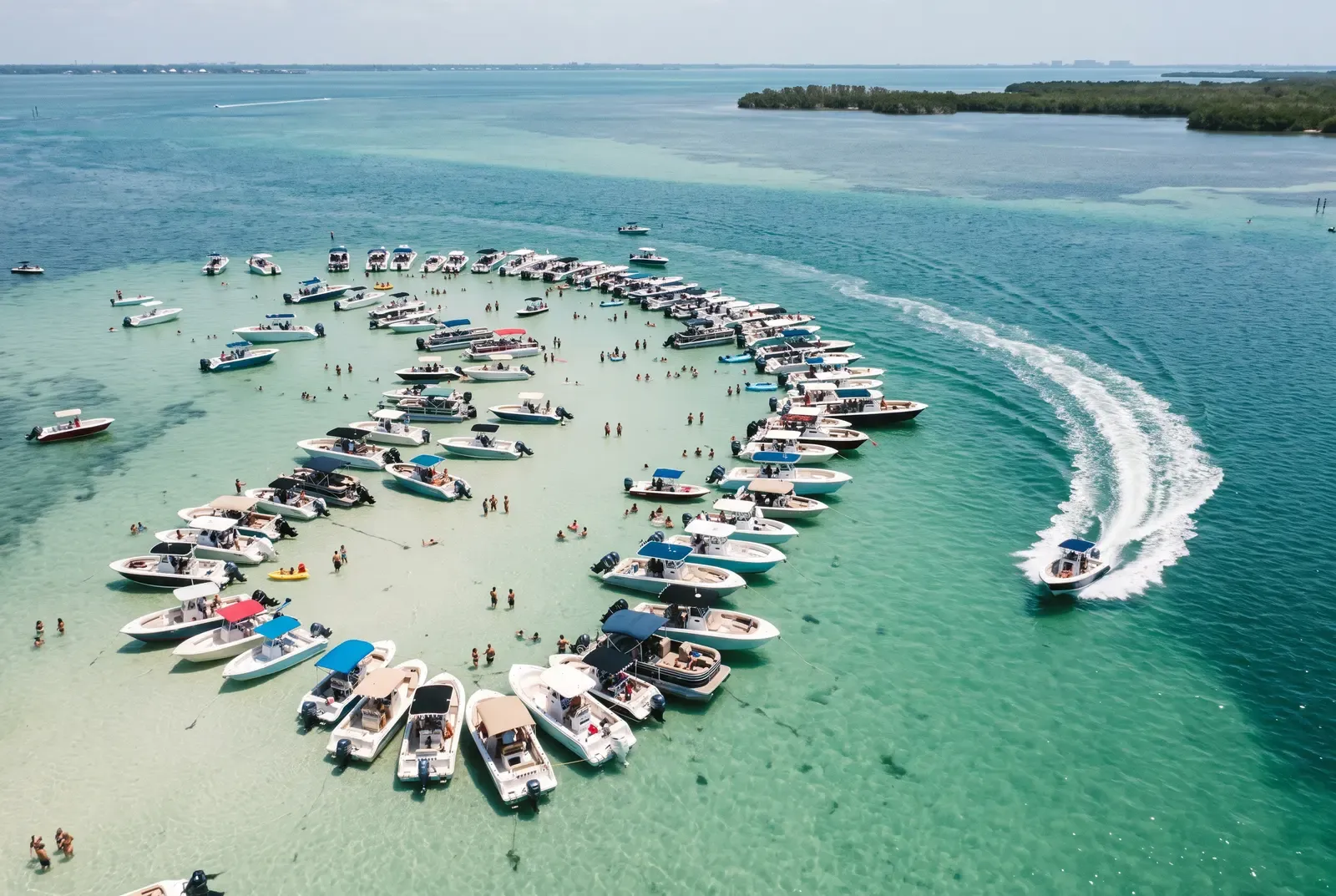
On a warm weekend, Tampa Bay’s sandbars turn into floating neighborhoods. Boats anchor a few yards apart, kids wade between hulls, music drifts across the water, and coolers stay open until the tide turns. Spots like Beer Can Island off Apollo Beach and Three Rooker Island near Tarpon Springs draw crowds all season long.
That closeness is part of the fun. It’s also why sandbar collisions happen, and why sorting out who is responsible afterward can get complicated.
How Sandbar Collisions Happen
Most sandbar injuries come from a handful of familiar mistakes:
- Coming in too fast. A boat arrives near cruising speed and can’t stop or turn in time among anchored vessels.
- No proper lookout. The operator is watching the depth finder, a phone or the party instead of the water ahead.
- Dragging anchors. Wind and tide shift, a poorly set anchor lets go, and a boat swings or drifts into its neighbors.
- Propeller strikes. Swimmers and waders are hard to see from the helm, especially around the sterns of other boats.
- Careless wakes. A boat throwing a large wake near an anchored crowd can knock people off swim platforms or into hulls.
- Alcohol. Boating under the influence is illegal in Florida (section 327.35), and impaired judgment on a packed sandbar is a dangerous combination.
- Inexperience. Rental and borrowed boats are often run by people who rarely operate a vessel.
Florida Boating Rules That Shape Liability
Florida’s boating laws (Chapter 327, Florida Statutes) set the baseline for how operators must behave. Among other things, operators must keep a proper lookout and travel at a safe speed for the conditions. On a crowded sandbar, a safe speed is often barely above idle.
Florida also requires boaters born on or after January 1, 1988, to have a Boating Safety Education ID card. Whether the operator had one, and whether they followed basic rules of the road, often becomes part of the liability picture.
After a collision, the operators involved generally must stop, help anyone who is injured, and exchange identifying information. Accidents causing injuries that need more than first aid must be reported to law enforcement.
Who May Be Liable
A single sandbar accident can involve several people and businesses. Here’s where we typically look.
The Operator
In most collisions, the starting point is the person at the helm. An operator who came in too fast, failed to keep a lookout, ignored swimmers or was drinking may be responsible for the injuries that followed.
More than one operator can share the blame. For example, one boat may drag anchor while another comes in too fast to avoid it.
The Boat Owner
Owners aren’t always the ones driving. An owner may still share responsibility, for example by handing the keys to someone who was impaired, inexperienced or not legally allowed to operate the boat, or by failing to keep the boat and its equipment in safe condition.
Rental Companies, Boat Clubs and Charters
Tampa Bay has no shortage of rentals, boat clubs and captained charters. These businesses may be responsible if they rented to an obviously unqualified operator, skipped safety instruction, or sent out a boat with known mechanical problems.
If you signed a waiver, don’t assume anything until a lawyer reads it. Waivers can be a serious obstacle, and whether one applies depends on its exact wording and the facts of what happened.
Manufacturers and Repair Shops
Sometimes the cause is mechanical. A steering failure, a sticking throttle or a defective part can point to a manufacturer or a shop that did faulty work. These cases often turn on preserving the boat and its parts before anything is repaired or thrown away.
Mechanical failures can have devastating results. In one of our cases, a client was thrown from a boat in Clermont, Florida, because of a steering column failure, resulting in his wrongful death. The initial offer was $0 and liability was disputed. The result: $450,000, Drowning in Clermont, FL. Past results do not guarantee a similar outcome.
If You Were a Passenger
Passengers are rarely at fault for a collision. If you were hurt as a guest on someone else’s boat, you may have a claim against your own boat’s operator, the other boat’s operator, or both. That can feel awkward when the operator is a friend, but when coverage exists, claims like these are typically paid by insurance rather than out of a friend’s pocket.
Shared Fault and Which Law Applies
Tampa Bay is navigable water, so federal maritime law can come into play alongside Florida law. Which rules apply affects how shared fault is handled and can affect deadlines.
Under Florida’s modified comparative negligence rule (section 768.81), your recovery is reduced by your percentage of fault, and if you are found more than 50% at fault you generally cannot recover. Maritime law handles shared fault differently. Sorting out which framework governs is one of the first questions we answer in a boating case.
On deadlines, the safest approach is to assume the shorter one. For most Florida negligence claims, that’s now two years (section 95.11), so don’t wait to get advice.
Insurance Works Differently on the Water
Car crashes in Florida run through the no-fault PIP system. Boating injuries generally don’t, and Florida generally doesn’t require recreational boat owners to carry liability insurance.
Coverage may come from a boat policy, a homeowner’s policy, a rental company’s policy or a business’s commercial coverage. Finding every available policy is a big part of the work in a boating case.
What to Do After a Sandbar Accident
If you or someone you love is hurt, take these steps when it’s safe:
- Get medical help. Call 911 or flag down nearby boaters. FWC officers, the Coast Guard and local sheriff’s marine units patrol the bay.
- Report the accident to law enforcement and get the responding agency’s name and a report number.
- Identify the boats. Note the Florida registration numbers on the hulls, the operators’ names and contact information, and the owners if they’re different.
- Photograph everything. Capture the boats, the damage, injuries and where each boat was anchored. On a sandbar, someone nearby was probably filming, so ask.
- Get witness information from people on nearby boats before everyone heads home.
- Hold off on statements. Don’t give a recorded statement to any insurer before talking with a lawyer. Here’s why recorded statements matter.
Talk to a Tampa Boat Accident Lawyer
Boating cases can involve Florida law, federal maritime law, unusual insurance questions and evidence that can literally drift away. The sooner we start, the more we can preserve.
Learn more about how we handle boat accident claims, and if a loved one was lost, our wrongful death page explains how those claims work. Call (813) 915-1110 for a free consultation, day or night, or contact us online. We work on a 100% contingency fee, so you pay no fee unless we recover for you.
This article is general information, not legal advice. Every case is different.

Founding attorney of Hancock Injury Attorneys. A former insurance defense lawyer, Mike has handled Florida personal injury cases for more than 35 years.
Continue reading
Just in a Car Accident in Tampa? What To Do First
A calm, step-by-step guide to the first hours and days after a Tampa crash: staying safe, the police report, photos, Florida's 14-day PIP rule, and what not to tell an adjuster.
When Is It Too Late to File a Personal Injury Claim in Florida?
Florida cut the deadline for most injury lawsuits from four years to two in 2023. Here's how the two-year rule works, the exceptions, and why waiting is riskier than it looks.

Do You Have to Give a Recorded Statement to the Insurance Company?
The other driver's adjuster wants your story on tape. Florida law doesn't require it. Here's why insurers ask, what they listen for, and what to say instead.