Tampa Slip and Fall Lawyers Who Hold Property Owners Accountable
A fall at a grocery store, restaurant, or apartment complex can mean surgery, months of missed work, and a property owner's insurer insisting it was your own fault. Florida law gives injured people real rights, but slip-and-fall claims come with specific proof requirements, and the key evidence often disappears within days.
What Premises Liability Covers
Premises liability is the area of law that holds property owners and businesses responsible when unsafe conditions on their property injure someone. Slip-and-fall cases are the most familiar example, but claims also arise from:
- Wet or slick floors, spills, and leaking coolers or freezers
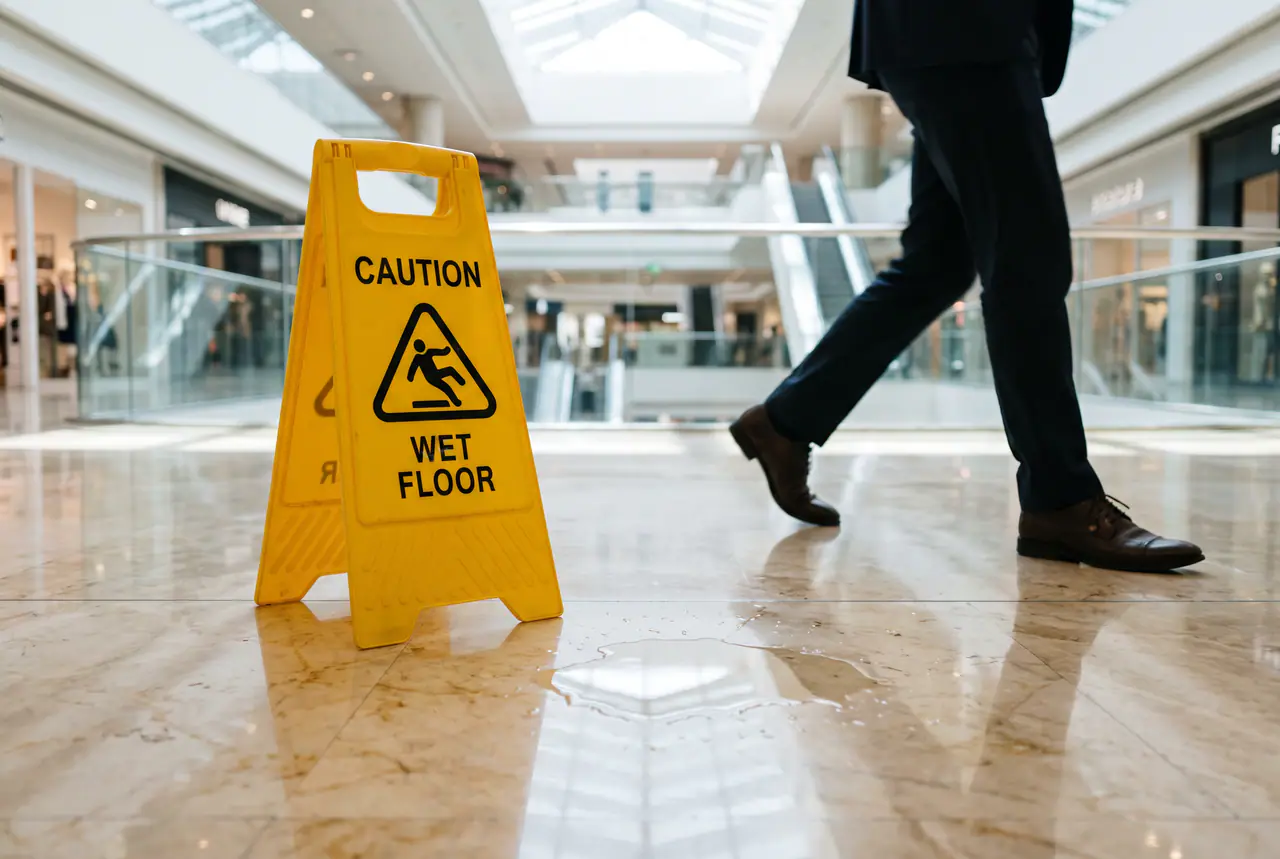
- Rain-soaked entryways and freshly mopped floors with no warning sign
- Broken or uneven stairs, loose handrails, and damaged sidewalks and parking lots
- Poor lighting in stairwells, hallways, and parking areas
- Torn mats, loose rugs, and cords or merchandise left in the aisles
- Merchandise falling from overstocked shelves
- Negligent security, when an owner fails to take reasonable steps against foreseeable crime
Responsible parties can include property owners, tenants and businesses, property managers, cleaning and maintenance contractors, and homeowners associations. Claims against government property owners carry pre-suit notice requirements, so call promptly if you fell on public property.
Falls at Grocery Stores and Big-Box Retailers
We help people hurt at Publix, Walmart, Target, Winn-Dixie, and other grocery and big-box stores across Tampa Bay, as well as at convenience stores like Wawa, where self-serve food and drink stations make spills common. These businesses handle heavy foot traffic and constant restocking, so floor hazards are foreseeable. They also have claims departments whose job is to resolve injury claims as cheaply as possible.
Over the years, we have proven negligence against businesses such as Publix, Walmart, Target, and Home Depot in slip-and-fall and trip-and-fall cases. We know how these claims are defended, and we build our cases to meet those defenses.
What Florida Law Requires You to Prove
Owners are not automatically responsible for every fall. In general, you must show that a dangerous condition existed, that the owner knew or should have known about it, that the owner failed to fix it or warn you, and that this failure caused your injuries.
Spills and other "transitory foreign substances." When you slip on something like a spilled liquid or dropped food in a business, section 768.0755, Florida Statutes, requires proof that the business had actual or constructive knowledge of the dangerous condition. Constructive knowledge can be shown by evidence that the substance was there long enough that the business should have found it, or that the condition happened regularly and was foreseeable. Footprints or cart tracks through a spill, or a cooler that has leaked for weeks, can help prove it.
Why you were there matters. Florida sets the owner's duty based on your status on the property:
- Invitees, such as shoppers, diners, and hotel guests, are owed the highest duty. The owner must use reasonable care to keep the property reasonably safe and must warn of hidden dangers it knows or should know about.
- Licensees are on the property with permission but for their own purposes. Invited social guests are generally treated much like invitees, while uninvited licensees and trespassers are owed a more limited duty.
Comparative fault. Expect the owner to argue that the hazard was obvious or that you were looking at your phone. Under section 768.81, your recovery is reduced by your share of fault, and if you are found more than 50% at fault you generally cannot recover.
Protect the Evidence, Starting Today
Premises cases are often won or lost on evidence the property owner controls. Many surveillance systems automatically record over older footage after a set period, so a written demand to preserve the video should go out right away. After a fall:
- Report it to the manager and ask for a copy of the incident report. Be cautious about signing anything.
- Photograph the hazard, the surrounding area, any missing warning signs, and your injuries.
- Get names and phone numbers of witnesses, including employees who responded.
- Keep the shoes and clothing you wore, unwashed.
- Get medical care promptly and keep every appointment.
- Decline recorded statements to the store's adjuster, and stay off social media about the fall.
Results in Premises Cases
- $500,000: Slip and Fall in Big Box Store in Dunnellon, FL. Our client slipped in clear water leaking from an open-top freezer and needed shoulder arthroplasty and multiple reconstruction surgeries.
- $485,000: Trip and Fall in St. Petersburg, FL. Our client, an Amazon delivery driver, broke an ankle stepping into a deep hole in pavement that a homeowners association had failed to maintain.
- $150,000: Trip and Fall in Tampa, FL. The heel of our client's shoe caught between planks of outdoor decking at a restaurant on the Riverwalk, tearing the meniscus in the knee.
Past results do not guarantee a similar outcome.
What Compensation Can Cover
A premises liability claim may seek past and future medical expenses, lost wages and earning capacity, pain and suffering, mental anguish, scarring and disfigurement, and loss of enjoyment of life. For most claims arising on or after March 24, 2023, Florida generally allows two years to file a lawsuit, though exceptions exist and some deadlines are shorter.
Talk to a Tampa Slip and Fall Lawyer
The sooner we are involved, the more evidence we can save. We work on a contingency fee and advance the costs of your case, so there is no fee unless we recover money for you.
Call (813) 915-1110, 24/7, or contact us for a free consultation by phone, video, or at your home.
Serving Fall Victims Across Tampa Bay
We represent people hurt in falls at stores, restaurants, apartments, and other properties in Tampa, Carrollwood, Wesley Chapel, Land O' Lakes, Spring Hill, and beyond.
- Tampa
- Carrollwood
- Northdale
- Lutz
- Town ’n’ Country
- Brandon
- Temple Terrace
- New Tampa
- Wesley Chapel
- Land O’ Lakes
- Zephyrhills
- Odessa
- Spring Hill
- Brooksville
- Hudson
- New Port Richey
- Hillsborough County
- Pasco County
- Hernando County
Frequently Asked Questions
What do I have to prove in a Florida slip and fall case?
Generally, that a dangerous condition existed, that the owner knew or should have known about it, that the owner failed to fix it or warn you, and that this caused your injury. For spills and similar substances in a business, section 768.0755 requires proof of actual or constructive knowledge, which can be shown by how long the hazard was there or how regularly it occurred.
The store says the hazard was obvious. Does that end my case?
Not necessarily. An obvious hazard may affect how fault is divided, but owners still have a duty to keep the premises reasonably safe, and many hazards, like clear liquid on a glossy floor, are not obvious at all. Florida reduces your recovery by your percentage of fault and bars recovery only if you are found more than 50% at fault.
How long do stores keep surveillance video?
It varies, and many systems record over older footage automatically. That is why we send a preservation demand as soon as we are hired. If you wait weeks to act, the video showing the hazard and how long it sat there may be gone.
Should I give the store's insurance company a statement?
Talk with a lawyer first. Store adjusters often contact injured customers quickly, and what you say in a recorded statement can be used to argue that the fall was your fault or that your injuries are minor. We can handle those conversations for you.
How long do I have to file a slip and fall claim in Florida?
For most claims arising on or after March 24, 2023, Florida generally allows two years to file a negligence lawsuit. If you fell on government property, pre-suit notice requirements apply and timing matters even more. Call promptly so the evidence can be preserved.